
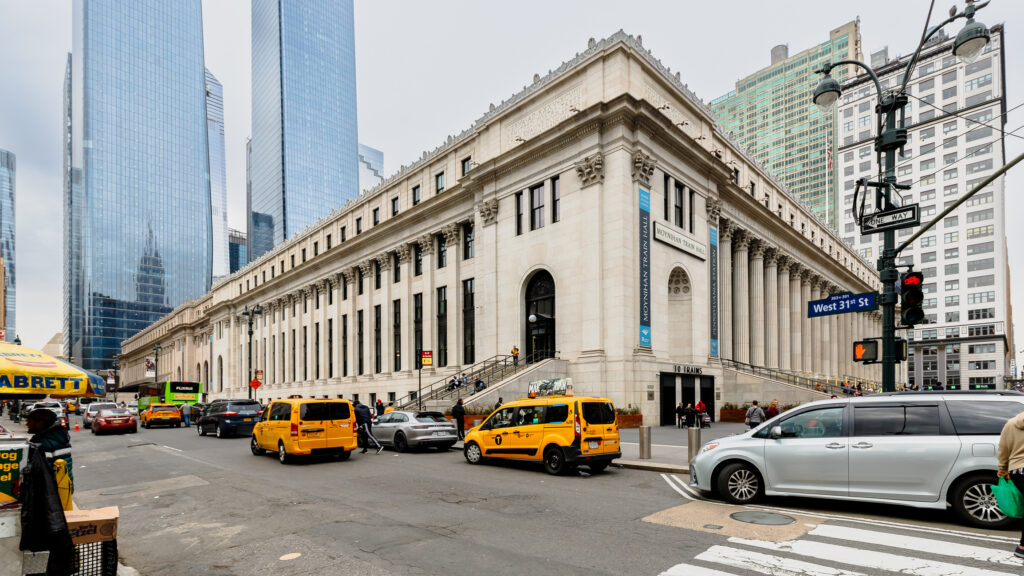
“There’s a train to take me to heaven, Lord,” sang The Felice Brothers years ago about New York City’s Penn Station.
And rightly so — because Penn Station is in the news again.
Last week, the Trump administration announced it intends to bounce the Metropolitan Transportation Authority (MTA) from leading the long-awaited — and begrudgingly slow — renovation of the iconic (well, definitely derided) train station.
To be fair, there’s been some progress. The 7th Avenue entrance and corridor to 8th Avenue was finally rebuilt and rehabilitated. The infamous “head knockers” — low-hanging steel beams just 7 feet off the floor — are now a thing of the past.
I’m writing this post while listening to The Felice Brothers — the inspiration, I guess, behind this piece. Since I arrived in Manhattan in 2010 (now living in Westchester County, but still proudly New York), I’ve been following the progress — or lack thereof — of efforts to rebuild the busiest train station in North America, and likely the Western Hemisphere.
Groups like the Regional Plan Association have reported that, especially before train ridership plummeted during COVID, Penn Station saw over 650,000 people entering and leaving daily — more foot traffic than the combined volume of the region’s three major airports.
I remember traveling as a reporter to Washington, D.C., to cover transportation issues, where mostly Republican members of Congress would say, “Well, I’m a private sector guy.” It was their shorthand way of saying they didn’t understand why Amtrak wasn’t profitable — and why it needed annual federal support. (That’s another topic for another day.)
So when I first saw the headline that the Trump administration wants to take over Penn Station’s redevelopment, I interpreted it as a big middle finger to the MTA — a move fueled by lingering resentment over Manhattan’s congestion pricing program, which launched on January 5 and continues to roll forward despite fierce political pushback.
But then I read Governor Kathy Hochul’s response to Trump’s move — and surprisingly, there were no howls from Albany or MTA headquarters in Lower Manhattan. Instead, the Governor welcomed the announcement, saying her administration has long maintained that a $7 billion project to rebuild Penn Station would require federal assistance.
I don’t live in Manhattan anymore, but I still read numerous city-based publications like Streetsblog NYC, which has been providing consistent and excellent coverage of congestion pricing’s rollout.
In fact, Streetsblog’s editor, Gersh Kuntzman, organized a pep rally on one of the coldest nights this past January in Manhattan — a celebration of congestion pricing’s long-awaited arrival.
So now congestion pricing is here to stay, they say — at least until October — the result of a temporary legal compromise between the federal government and the MTA. But U.S. Transportation Secretary Sean Duffy isn’t pleased. He’s voiced concern that working-class New Yorkers are being unfairly taxed to enter the Central Business District.
Congestion pricing advocates, however, argue that Duffy’s stance is little more than a smokescreen to preserve car dependency, both in the New York metro area and across the country.
They point to Duffy’s recent cancellation of an Amtrak grant that would have helped support a high-speed rail line between Houston and Dallas. That move, paired with the resignation of Amtrak CEO Stephen Gardner, raised alarms that Amtrak could once again be gutted by conservative-leaning officials.
But in an unexpected twist, Amtrak is now the lead agency on the Penn Station redevelopment — a reminder that, for all its underfunding and political friction, Amtrak still owns the station.
So maybe, for now, the trains will roll on for another day.